Words by Bob Thomas MBE
We’ve just returned from another successful trip to Skye, with another main ridge traverse under the belt and some other scrambles and climbs: Odell’s Route on Marsco (Red Cuillins) along with The Original Route on Window Buttress, and Pinnacle Ridge on Sgurr Nan Gillean. All really enjoyable climbs and scrambles in their own right, but the jewel in the crown is the Main Ridge Traverse of the Black Cuillins. It’s the main reason that we, along with a multitude of other mountaineers, head to Skye every year. When the weather is looking good, the campsites at Glen Brittle and Sligachan fill up with parties seeking to make a one or two day traverse of the ridge. You can take a fair guess at who's going to tackle the 14km or so traverse as they’re busy making the final adjustments to the kit, as well as doing their best to try to pick up the mobile network to get the latest forecast. Needless to say, you’ll nearly always strike up a conversation with somebody wishing to discuss the relative merits of a particular start point; where water may be found, or what footwear should they go for.
It’s fair to say that the Cuillin Ridge is widely regarded as the UK’s most demanding and sought after ridge traverse and for me how somebody decides to tackle the challenge is a personal choice. A one day traverse is a terrific undertaking that should not be underestimated, even more so if it’s onsite. Two days has now become the norm, and for me, it’s the preferred way. You get a chance to see the magnificent views and absorb the atmosphere. Running the ridge is popular, but don’t forget that these incredible times are built on the runners’ superb knowledge and fitness built up over a number of years. The core principles of training, preparation, knowledge, planning and equipment all apply when planning for a successful summer traverse (as well as for other long mountain days in the UK, the Snowdon Horseshoe for example). We’d like to stress at this stage that this isn’t a guide on how to negotiate the ridge; rather it’s a round-up of the most common questions posed to us during the course of our work.
So let’s take a brief look at each of the factors listed above, in the context of the core principles, highlighting areas where parties sometimes get it wrong. Good hill skills and fitness is the bedrock upon which a successful traverse is built. Prior to heading to Skye we always prefer to run a series of training weekends in Snowdonia to ensure that everyone is fit enough and has the skills and equipment in place before heading to the Cuillins themselves. During the build-up, we deliberately programme long days on the hill, with a combination of climbing and scrambling that will be similar to that found on Skye.
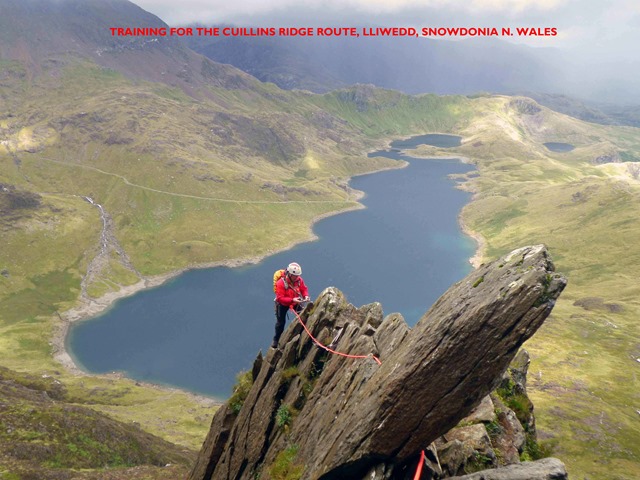
A Saturday and Sunday outing with 8 to 10 hour days isn’t unusual and we’ll climb and walk in the clothing and footwear that we’ll wear on the day. Also, we’ll make sure that everyone is familiar with the ropework and skills associated with scrambling. Not only does this help speed up movement, but it encourages teamwork, and makes everybody feel that they have a stake in the crossing, rather than purely being guided.
Typically we’ll build a training day around a long walk in, incorporating a difficult approach, followed by a multi-pitch climb, then a long walk out, once again incorporating some scrambling and route finding. The photograph above illustrates this. This was taken during the final build-up weekend and involved a ninety minute walk to the Lliwedd, then a climb up Ridge Route on the aforementioned cliff, followed by a Grade 1 scramble descent and walk back to the car park. All in all a demanding day, which gives an idea of the type of training involved. Also featuring in the training were ascents of East Gully Arete and Dolmen Ridge on the Glyderau, along with Sentries Ridge in the Rhinogs and Cyfrwy Arete on Cadar Idris.
KNOWLEDGE & PLANNING
Sound knowledge of the Cuillins and what tactics to employ is pivotal to a safe and successful traverse. You’ll need to know the route well and be familiar with all it entails in different conditions. There’s a long walk in at both the start and the end, and not forgetting the stiff climb from sea level to the start point at Gars-Bheinn – a slog that would do a normal day out on the hills justice. That said, clever planning and the use of stored food and water, along with an early start or high bivvy, can help alleviate some of the hard work needed during the approach.

In most cases a successful (unguided) traverse is built upon a number of visits to the Cuillins whereby you can gain familiarity with the route and identify the key black spots:
- The descent from Sgurr Thearlich to Bealach Mhic Choinnich
- The Tops of Mhadaidh (see picture below)
- Bidein Druim nan Rahm (see picture below)
- From the Basteir Tooth to Am Basteir (see picture below)
All of the above can be difficult to negotiate in good visibility and in poor weather and failing light they can seriously impede the group or individual’s progress, sapping energy, confidence and denting morale.
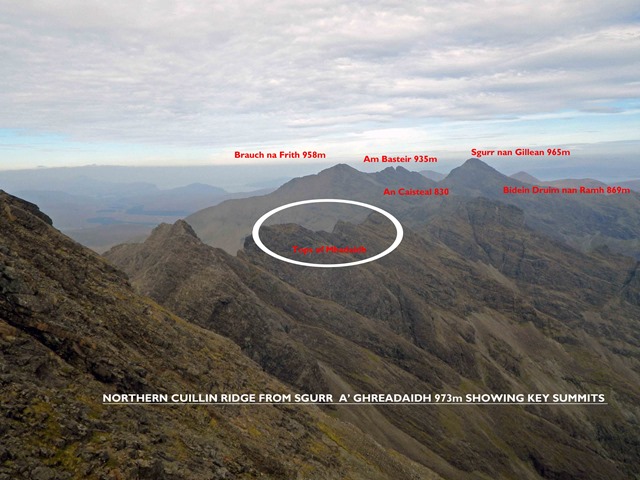
In good weather, the ridge can still pose route finding problems. Two parties that we encountered on our recent traverse had wasted valuable time and energy, along with subjecting themselves to unnecessary danger, due to poor route finding during their descent from Bidein Druim nan Rahm - and that was in great conditions. In inclement weather, you might find large sections of the ridge cloaked in mist, and the basalt rock extremely slippy, even in the best footwear.
Whilst on the subject of weather, during the lead up to the traverse a good understanding of the weather picture and how it might develop and impact on the Cuillins in essential. Finding that right weather window is essential and can be the difference between making the final peak, Sgurr nan Gillean, or having to abandon the attempt. Don’t forget that failure rate for the crossing is around 30%, with the weather being cited as the main culprit. We always allow a week weather window per party, and we’re never afraid to put off a two day attempt until the forecast suggests two days of suitable conditions. In the meantime, while we wait, there are always options for one day familiarisation scrambles and walks, or climbing on one of Skye’s many crags. Not forgetting that food and water points on the ridge might need to be stocked prior to the traverse taking place.
ROUTE FINDING & DECISION MAKING
On the day knowledge combined with macro and micro route finding will come to the fore. The picture below shows what awaits from the summit of Gars-bheinn. No real problems at this stage and parties might be lulled into a false sense of security, but route finding soon becomes an issue when heading to the summit of Sgurr Dubh Mor. Scree ramps and steep sided gullies will pose a more serious challenge.

Once clearing Sgurr Dubh Mor another section of easier ridge appears towards the TD Gap. At this stage, route selection starts to get more serious. Multiple, slow parties at the TD Gap might force you to wait or opt to bypass. Once again route finding and knowledge will come to the fore.

On clearing the TD Gap, Sgurr Alasdair and Thearlaich await, once again relatively straight forward in good weather, but the descent of Thearlaich towards Mhic Choinnich and King’s Chimney is a more serious proposition and the first black spot on route. Again sound route finding and decision making based on the party, conditions and ability is called for. Options that face the party are varied and can only be made on the day. It’s at this stage, if not earlier at Sgurr Dubh Mor, that deficiencies in ability, knowledge and planning will start to be exposed; and remember at Sgurr Mhic Choinnich you’re just under halfway with more of the same ahead.

Next, let’s look at the skills & equipment required.
PERSONAL MOUNTAIN SKILLS & EQUIPMENT
The photographs below show the Inaccessible Pinnacle and Second Top of Mhadaidh.
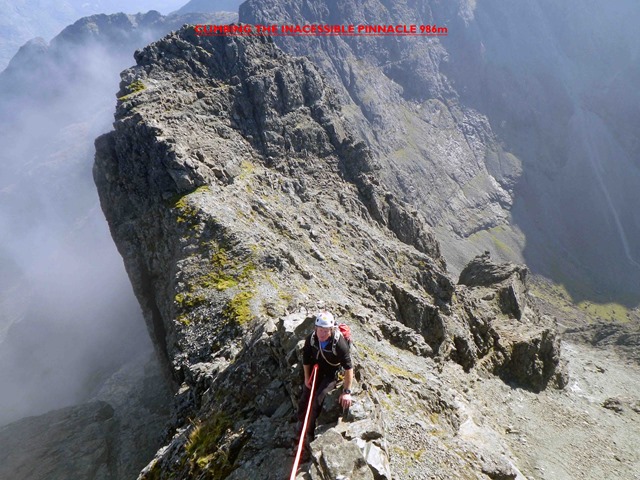


These are just two of the four climbs to be found on the traverse:
Thearlaich Dubh Gap (Severe)
King’s Chimney (Difficult) - Sgurr Mhic Choinnich
Inaccessible Pinnacle (Moderate)
20m Moderate to gain the 2nd Top of Mhadaidh
Lotta Corrie Route (Moderate)/Naismith’s Route (Severe) - Am Basteir.
There are also abseil descents/back climbs into the TD Gap, from the Inaccessible Pinnacle and, depending on conditions from Bidein Druim nan Rahm and several other sections on the ridge. Scrambling varies between grade 1 and 3 with one of the best scrambles in the UK up An Stac (optional), just before you arrive at the Inaccessible Pinnacle. Once again quick, safe efficient movement is based on sound skills and good equipment and clothing fit for purpose. Each route has its own particular challenge, particularly when you take the boots and the packs into consideration, and possible damp conditions. As already covered, training and preparation should reflect the real thing as much as possible, hence packs and boots in North Wales.
Parties, if they choose to, should be well versed in roping up and coiling and storing equipment quickly with the minimum of fuss. Check your pack can take the extra gear and food that you might not take on a training weekend. You’ll be surprised how many people have asked to borrow a larger pack at one of the campsites, having overlooked carriage of food, water and climbing gear.
For the ridge the ‘Light is right’ is the mantra – but not to the detriment of personal safety. Equipment should be tailored to the conditions and the individual. On a two day traverse, I’ll take lightweight sleeping bag roll mat and cooker, along with 2 litres of water (with additional water pre-placed if needs be). Climbing equipment & rope, for negotiating the Thearlaich Dubh Gap and abseils on the route, are tailored to the climb and scramble. No need for massive racks or twin ropes
Clothing is governed by the weather and type of crossing, as is footwear. For my part I always wear boots, that way you’re feet and ankles are well protected, and it makes climbing the TD Gap – if damp – easier. When I’ve encountered parties in fell or approach shoes, unless they’re running, I’ve found little difference in the speed at which we move.
One thing that’s often overlooked, but always commented at the end is gloves. The gabbro and basalt can chaff and rub the skin. A fall can have nasty consequences, with sharp scree and rock making short work on flesh. For that reason, I always wear a sturdy, well fitting set of gloves. During the training, I’ll climb and carry out all rope work without taking them off to ensure that I’m used to them and that they fit well. Walking poles: you might not choose to carry them on the traverse, but for me, I find a pair of lightweight poles on the ascent and descent from the ridge is a luxury worth taking. Not essential, but works wonders on saving the knees and back. For days out on the Cuillins and approaches in general, I always pack a set.
As for guide books, mapping, compass & GPS. I always carry a cut-to-size laminated map and the Rock Fax guide to the ridge (handy for keeping the party in the picture), and I’ve a lightweight Garmin GPS, just in case that Cuillin Gabbro starts to play tricks with the compass.
For details of Contour’s Cuillin and Snowdonia Traverse please visit the website at Contour Outdoor or ring on Freephone 08000148657
Kit that Bob used from Trekitt include:
Scarpa Manta Pro GTX – Superb support and comfort yet light and sensitive enough for scrambling/easy climbing
Leki Micro Vario – Essential for those long ascents and descents and pack up neatly into your pack when not required
Beal Joker 9.1mm rope – Perfect for scrambling on the ridge