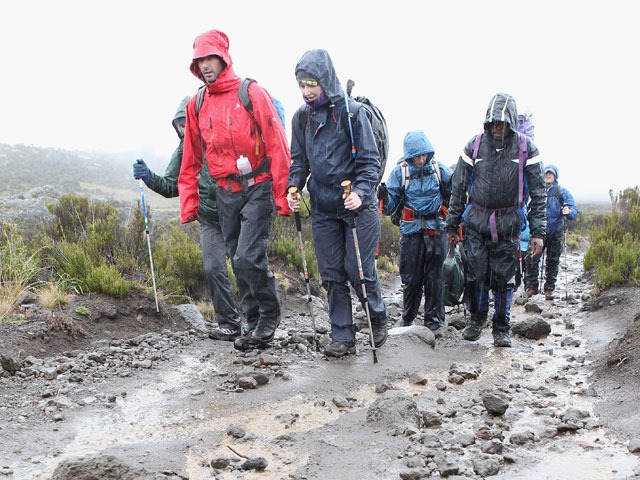
This has got to be the most asked question that we get at Trekitt. It appears that the biggest concern for most outdoor enthusiasts is whether they will be able to remain completely dry when out and about in the hills. This is an understandable concern as no one really wants to get wet and cold when participating in the pursuits that we all love and dedicate a large part of our spare time to. But is it realistic to expect to remain completely dry in the clothing and equipment we use when you consider the conditions you may experience and the fundamental design limitations of the kit we use?
Modern designs, production techniques and fabrics have all dramatically improved over the years to the point where manufacturers are able to make some pretty bold claims about products being waterproof. However the human body hasn’t changed that much and when I last looked we still have heads, arms, legs and feet. These appendages have the habit of exposing themselves to the elements; heads, hands and legs all protrude from various holes in jackets and feet cannot be completely sealed inside boots as they are attached to our legs.
Products may well use completely waterproof fabrics, most with breathable properties, but by design, the products are literally full of holes, and if like me you have experienced the kind of driving horizontal rain often found in the mountains you will know that water will get inside a jacket. It will wick up the sleeves, especially if you are wearing gloves, it will get blown up inside from the big hole at the bottom where your legs come out and it will get inside the hood and go down the big hole where your head sticks out.
This phenomenon is not restricted to clothing, footwear also suffers from the raised expectations caused by the extravagant claims made by the marketing departments of fabric and product manufacturers. But in the real world in very wet conditions, in boggy terrain and especially in long wet grass water will get inside your boots. By far the worst conditions for “leaky” footwear is long wet grass; grass literally wipes your boots with water and also soaks your trousers and socks. If your trousers get wet your socks will get wet and that water will inevitably end up inside your boots.

You may well think that they are leaking, but in those conditions, it is extremely rare. Once water gets inside a “waterproof” boot it becomes trapped and cannot escape, so not only do you have wet feet, they will stay wet all day!
For a “waterproof” boot to truly leak the waterproof membrane within the material must be punctured or damaged and considering that is laminated between a tough outer and inner fabric it is usually unlikely that that is the cause of the problem. One of the most common sources of damage to boot membranes that we see is from a phenomenon that we have christened “toe lift”. Some people lift their big toe when they walk as a result of some instability in the foot, if their toe nails are not kept really short the nail will wear away the internal lining of the boots, therefore, exposing the membrane to damage. People who regularly get holes in their socks above the big toe will invariably suffer from “toe lift” and should be aware of the damage they can potentially cause.

So how do we stop water from getting in? Well, to be honest, it is almost impossible; for clothing simply ensuring that all zips are done up, sleeve cuffs and hem drawcords are tight and hoods secured properly will certainly help to minimise water ingress. In footwear, the use of gaiters will reduce water ingress, especially in the dreaded long wet grass. Proper care and maintenance of your kit will also help to keep it performing well, think of it like servicing your car, it needs to be done properly and regularly.
The alternative is to accept that in certain conditions you are going to get wet and then make sure that you remain comfortable and able to dry out quickly. For clothing, this means wearing a proper technical layering system made up of modern materials that absorb little water and dry out quickly. The worst thing you can wear under your expensive Gore-Tex jacket is a cotton tee shirt, cotton absorbs moisture like a sponge and takes ages to dry, even after light exertion it could be soaked in sweat so imagine how soggy and uncomfortable you’ll feel if it rains heavily?
For footwear always ensure you are wearing technical walking socks that fit properly and wick moisture away. Consider using gaiters and you may also want to consider an un-lined boot. Many experienced and extreme end users will wear highly breathable non waterproof boots all year round and simply accept that they will get wet, but they also know that they will always be comfortable and that their socks and boots will dry out exceptionally quickly.
So the next time you are out in the hills in wet conditions or tramping through long wet grass and you get wet, ask yourself is the product really leaking? Or is water just doing what it does best? Water will rapidly move from an area of high saturation to one of low saturation along the course of least resistance; so it will definitely get in through a big hole in your kit where bits of your body stick out.